Inner Sanctuary Institute

New units available  |
Starting at $3,000
Clinical Pastoral Education (CPE)
ACCREDITED CHAPLAINCY EDUCATION UNITS CPSP Independent Accredited Center
❋ ACCREDITATIONSThese units of Clinical Pastoral Education (CPE) are accredited by the College of Pastoral Supervision and Psychotherapy (CPSP). Completion of a unit may be applied toward board certification with the Board of Chaplaincy Certification Inc. (BCCI) and the National Association of Catholic Chaplains (NACC). Eligible students may also apply for equivalency recognition with Neshama: Association of Jewish Chaplains. Certification and equivalency determinations are made by the respective organizations.

COHORT 2Extended Unit
Tuesdays, October 20, 2026 - March 30, 202712:00pm – 4:00pm CST
24 week course
What to ExpectThis IFS-informed Chaplaincy Education Unit is an online, cohort-based formation experience grounded in participants’ own ministry and community contexts. Drawing on the Clinical Pastoral Education tradition, the unit integrates Internal Family Systems with spiritual formation, reflective practice, and supervised learning.
❋ HOURS400 total hours
(300 clinical / 100 educational)
❋ ELIGIBILITYClergy, chaplains in formation, and ministry students
❋ TUITION$3,000
Payment plan available; to be paid in full by December 31, 2026
❋ FORMATOnline live participation, additional asynchronous video learning
❋ APPLICATIONDownload application and return to celeste@celestelebak.com. Accepting applications on a rolling basis until filled. Limited spaces available.
Through live online sessions, asynchronous learning, group process, didactic instruction, and supervision, participants deepen self-awareness, ethical discernment, and capacity for grounded presence within complex institutional environments.
COHORT 3Intensive Summer Unit
Tuesdays, May 4, 2027 - July 27, 20278:00am – 5:00pm CST
12 week course
What to ExpectThis IFS-informed Chaplaincy Education Unit is an online, cohort-based formation experience grounded in participants’ own ministry and community contexts. Drawing on the Clinical Pastoral Education tradition, the unit integrates Internal Family Systems with spiritual formation, reflective practice, and supervised learning.
❋ HOURS400 total hours
(300 clinical / 100 educational)
❋ ELIGIBILITYClergy, chaplains in formation, and ministry students
❋ TUITION$3,000
Payment plan available; to be paid in full by June 15, 2027
❋ FORMATOnline live participation, additional asynchronous video learning
❋ APPLICATIONDownload application and return to celeste@celestelebak.com. Accepting applications on a rolling basis until filled. Limited spaces available.
Frequently Asked Questions
-
This is a fully virtual Clinical Pastoral Education (CPE) unit offered through the Inner Sanctuary Institute. It is designed for clergy, chaplains in formation, and ministry students who want to deepen their pastoral presence and reflective practice. What makes this unit distinctive is its integration of Internal Family Systems (IFS) — a framework that helps participants understand their own inner experience alongside the people they serve.
-
This program is IFS-informed, meaning it draws from the insights and language of the Internal Family Systems model while remaining appropriate to a pastoral, non-clinical training context. It is not an IFS certification program, and no prior IFS experience is required. Whether you are new to IFS or already familiar with the model, you will find the framework applied in ways that are grounded in ministry practice — not therapy or clinical settings. The goal is to let IFS deepen your pastoral presence, not to train you as an IFS practitioner.
-
IFS is a non-pathologizing framework that understands human experience as made up of multiple "parts," alongside a core capacity — often called Self-energy — for presence, compassion, and clarity. For ministers and chaplains, this matters because it offers a practical way to understand your own internal responses in the moment of ministry, while also attending more thoughtfully to the inner worlds of the people you serve. IFS supports grounded, ethical, and relationally attuned care — especially in high-stakes moments involving suffering, conflict, and meaning-making.
-
The program requires a commitment of 400 hours overall: 300 clinical hours and 100 educational hours. These hours are a combination of live weekly group sessions held online, independent ministry practice in your own context, and structured reflection work completed asynchronously.
-
No. The program is fully online and cohort-based, meaning you can participate from anywhere. Your ministry work happens within your own existing community context — you don't need to move, relocate, or find a new placement site. The program is intentionally designed to integrate with the ministry you are already doing.
-
The program is built around five integrated components, each designed to strengthen a different dimension of pastoral formation:
Weekly IFS-Informed Reflections — structured written reflections connecting ministry encounters, inner awareness, and spiritual meaning-making.
IFS-Informed Verbatims — the traditional CPE verbatim format, expanded to include both internal and relational awareness.
Guided IFS Reflection in Group Sessions — each live session opens with a guided reflection to help participants access grounded presence before engaging ministry material.
Self-Energy Listening Circles — structured group experiences designed to build the capacity to remain present across difference.
IFS-Informed Supervision — supervision that integrates traditional CPE methods with attention to inner and relational experience.
-
Self-Energy Listening Circles are structured group experiences designed to give participants a direct, embodied experience of Self-energy in community. They are one of the most distinctive elements of this program. In these circles, participants practice sitting with difference — including differences in belief, identity, and experience — without moving to fix, interpret, or resolve. The format emphasizes speaking from personal experience rather than offering analysis or advice, and listening without interruption or correction. The intention is to reduce urgency and reactivity, strengthen the capacity to remain present across difference, and experience firsthand how grounded presence can shift relational dynamics. These are skills that are central to chaplaincy and ministry in diverse settings.
-
In traditional CPE, verbatims focus on the content of a pastoral encounter — what was said and done. In this program, verbatims are expanded to include both internal and relational awareness. In addition to describing the encounter, participants are guided to reflect on questions such as: What parts of me were leading in this interaction? What might have been happening in the other person's internal system? How did my internal experience shape the relational field? What might a more grounded, compassionate response have made possible? This approach helps participants connect their outer ministry with their inner life, making supervision richer and self-awareness more actionable.
-
No. This is a pastoral education program, not a clinical or therapeutic one. While it draws on IFS as an informing framework, it is designed for ministry contexts — not clinical practice. Participants are trained to provide pastoral care within an appropriate scope and to recognize when referral to clinical or mental health care is indicated. The program deepens self-awareness and relational presence; it does not train therapists or counselors.
-
This program is designed to meet all requirements for a CPSP-accredited CPE unit. It may also be applicable toward BCCI and NACC certification pathways. Equivalency is available through Neshama for eligible students. The program is sponsored by House Church Tulsa, a nonprofit organization. If you are pursuing certification through a specific body, we encourage you to reach out to confirm how this unit aligns with your particular pathway before applying.
-
The program draws on three primary resources that reflect its integration of IFS, relational practice, and grief work:
Kopald, S. (2023). Self-led: Living a connected life with yourself and with others. — a foundational exploration of IFS principles in relational life.
Schwartz, R. C. (2021). The internal family systems workbook. — practical exercises for understanding and working with inner parts, by the founder of IFS.
Weller, F. (2015). The wild edge of sorrow. — a soulful guide to grief as sacred work, reflecting the program's emphasis on grief as a central thread throughout formation.
-
Tuition is $3,000. The program accepts rolling applications until spaces are filled — and spaces are limited, so early application is encouraged. To apply, visit bit.ly/IFSCPEApp. If you have questions before applying, you're welcome to reach out directly to Program Administrator Rev. Dr. Celeste Lebak at celeste@celestelebak.com or by phone at 918-200-2010.
Meet the TeamLead Trainers
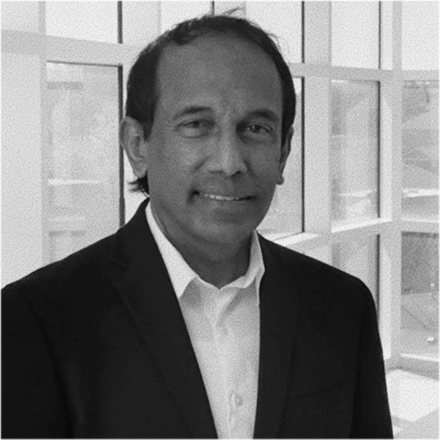
Rev. Dr. Jacob George
25+ years of experience in health care chaplaincy with an integrative and reflective approach.
Rev. Dr. Jacob George is a Board-Certified Chaplain (BCCI/APC) and Certified Clinical Pastoral Education Educator, ordained and endorsed by the Christian Church (Disciples of Christ). He has over 25 years of experience in health care chaplaincy and pastoral education.
He has served in a range of clinical and institutional contexts, including acute care hospitals, mental health services, hospice and palliative care, veterans’ hospitals, interfaith community settings, and pastoral leadership development. His Clinical Pastoral Education formation began at Pine Rest Mental Health Services in Michigan, which continues to inform his integrative and reflective approach to spiritual care and professional formation.
Dr. George has mentored and trained hundreds of chaplains across diverse professional and cultural contexts and currently serves as affiliate faculty at Phillips Theological Seminary.
His professional work includes participation in international disaster response in Sri Lanka following the 2005 tsunami and service at Bay Medical Center Sacred Heart in Panama City, Florida, after Category 5 Hurricane Michael in 2018, supporting staff and community members during recovery.
His contributions to chaplaincy and institutional ministry have been recognized with the 2019 Distinguished Service Award from the Association of Professional Chaplains and the 2020 Alberta Z. Brown Distinguished Minister Award for Institutional Ministry from Brite Divinity School at Texas Christian University.

Rev. Dr. Celeste Lebak
Imagination is at the heart of their approach, serving as a bridge between what is and what could be.An ordained Unitarian Universalist minister and Internal Family Systems practitioner specializing in trauma-informed spiritual care and the intersection of mental health and spiritual formation. She holds a Doctor of Ministry and brings more than twenty years of experience across parish ministry, prison, hospital, and social justice chaplaincy.
Dr. Lebak is the founder of the Restorative Justice Institute of Oklahoma and the Inner Sanctuary Institute, where she develops IFS-informed education for clergy, chaplains, and religious organizations. Her work integrates contemplative practice, systems awareness, and attention to internal multiplicity, with a focus on religious leaders who can offer grounded, ethically attuned presence within complex institutional settings.